
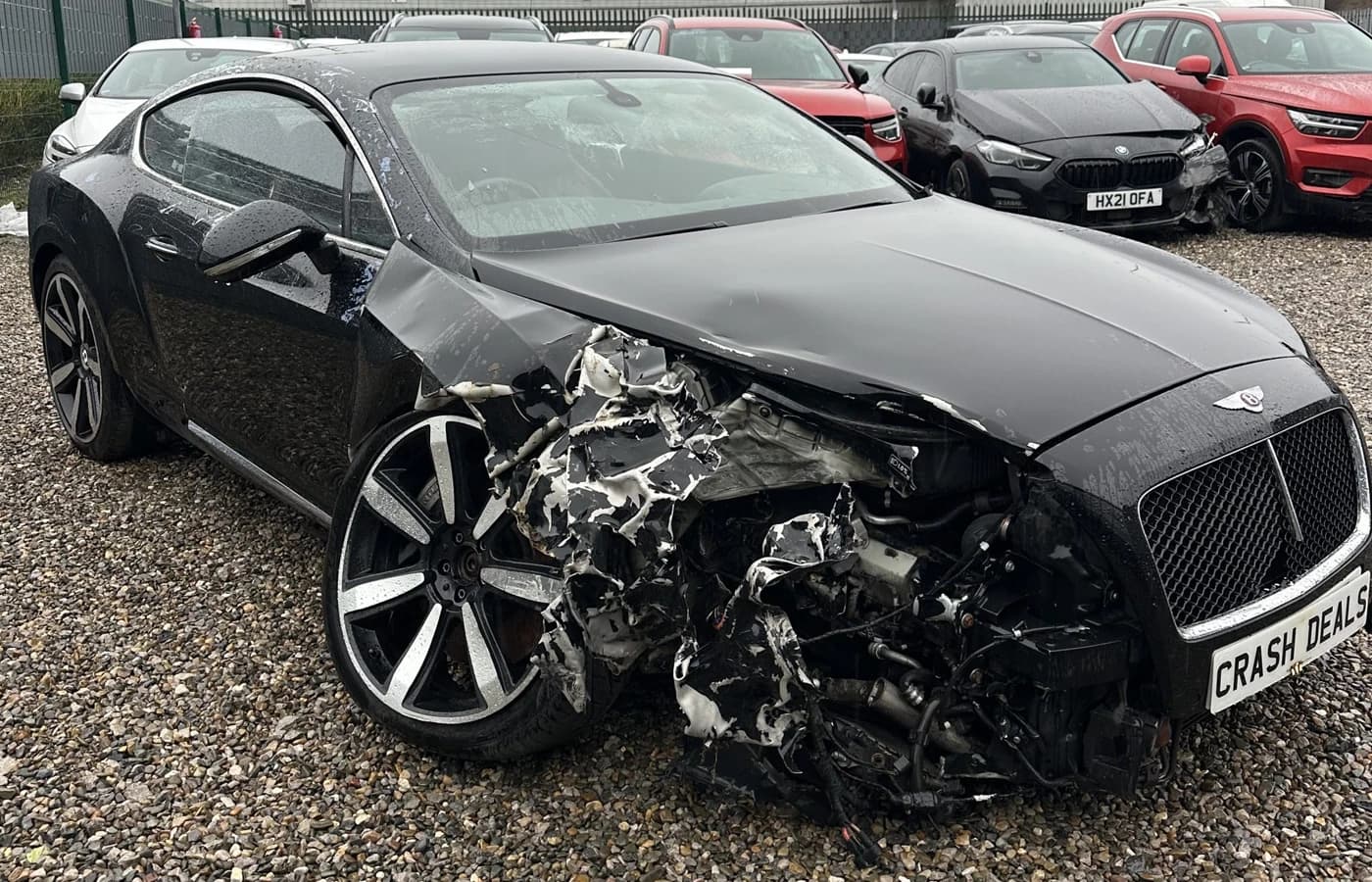
An insurance write-off leaves two separate questions: what happens to the claim, and what happens to the car? Before accepting an offer from a buyer, establish who owns the vehicle, whether you are retaining it and whether the insurer has confirmed its category.
A Category S or Category N supercar can be considered for sale, including as an unrepaired project. The category alone does not establish its value, repair cost or suitability for the road. Those require evidence about the particular vehicle.
Cat S and Cat N: the distinction that matters
GOV.UK's insurance write-off guidance distinguishes Category S, involving structural damage, from Category N, involving non-structural damage. Both can return to use after repair to a roadworthy condition.
Category N does not certify that a car is safe to drive now. “Non-structural” should not be rewritten as “only cosmetic”. Ask what is damaged and what has been checked, rather than using the letter as a repair specification.
Category A and B are different: GOV.UK says an A vehicle must be crushed, while a B vehicle's body shell must be crushed although some parts can be salvaged. They are outside the repair-and-resell route discussed here.
Also distinguish a damaged car from an insurance write-off. If you have not had a category confirmed, describe the damage and the claim status. Do not choose a category yourself from photographs.
Settle the insurance position before arranging a sale
If the claim is ongoing, ask the insurer to confirm whether you can retain the car and on what terms. Do not assume that receiving a settlement automatically leaves you free to sell the salvage.
Get the retention arrangement and any deduction in writing. Establish where the vehicle is held, who can authorise its release and whether transport or storage charges remain. If finance is outstanding, speak to the finance provider before agreeing a disposal; a buyer's interest does not resolve that agreement.
This avoids a practical problem: agreeing a collection date for a car that the storage operator is not authorised to release to your buyer.
Build a record of the damage and repairs
For a supercar, a useful evidence file explains what happened to this car, rather than simply stating that it is Cat S or Cat N. Gather what you already have:
- The insurer's category confirmation and retention paperwork.
- Photographs taken after the incident and before any repair.
- The engineer's assessment or workshop estimate.
- Invoices identifying the work completed and parts fitted.
- Any relevant measurements, inspections or test reports supplied by the repairer.
- Current photographs and a list of work still outstanding.
If something is missing, say so. Do not describe work as manufacturer-approved unless the supporting paperwork establishes that. A tidy exterior photograph cannot show the quality of hidden work.
For a repaired car, an independent assessment may help answer questions about its condition. The Department for Transport's consumer guidance recommends an independent expert or engineer's inspection when considering a repaired write-off. Buyers may therefore ask for more than an invoice and a recent MOT.
Explain the category when requesting offers
State the known write-off category and repair status in the first enquiry. Share the same information with each buyer so the offers are based on comparable descriptions.
Useful wording is specific: “Category S, unrepaired, front-end damage, engineer's report available” or “Category N, repaired in 2024, invoices available, current suspension warning”. These are examples of descriptions, not examples of cars we have bought.
Ask the buyer which information is still needed and whether its offer is conditional on inspection. Record the agreed condition and included items in the sale documents. That is clearer than relying on an informal message saying the buyer knows it is damaged.
There is no universal percentage deduction
A fixed discount from an undamaged car's advertised price is a poor substitute for an assessment. The model, specification, mileage, recorded history, actual damage and evidence of repair all need to be considered.
An unrepaired vehicle also presents unanswered questions about parts, labour and hidden damage. A buyer taking on those questions will price the car on that basis. Two vehicles with the same category can therefore attract quite different offers.
If you are considering repairing before selling, obtain a written scope and compare the likely proceeds after all costs with an as-is offer. Our repair-or-sell guide sets out the comparison, including how to handle costs that are still unknown.
Collection and paperwork need separate attention
Tell the collection operator whether the wheels turn, the steering works and the car can roll. Mention displaced bodywork, low clearance, loose parts and restricted access. Do not arrange for an unrepaired car to be driven away simply because its engine starts.
Keep the insurance paperwork distinct from the later sale notification. GOV.UK has different log-book instructions for retaining Cat S and Cat N vehicles, so check the current write-off guidance linked above for your position. When a retained vehicle is subsequently sold, use the appropriate DVLA sale or transfer process and keep confirmation.
Get an offer for the car in its present condition
To request a valuation, provide the registration, mileage, collection postcode, confirmed category and whether repairs have started or finished. Have the damage photographs and reports ready to share during the assessment.
We buy directly and also work with specialist buyers. Confirm the proposed buyer, inspection conditions, payment and collection arrangements before accepting. You can then make a decision based on an offer for your actual car, with its history fully understood.